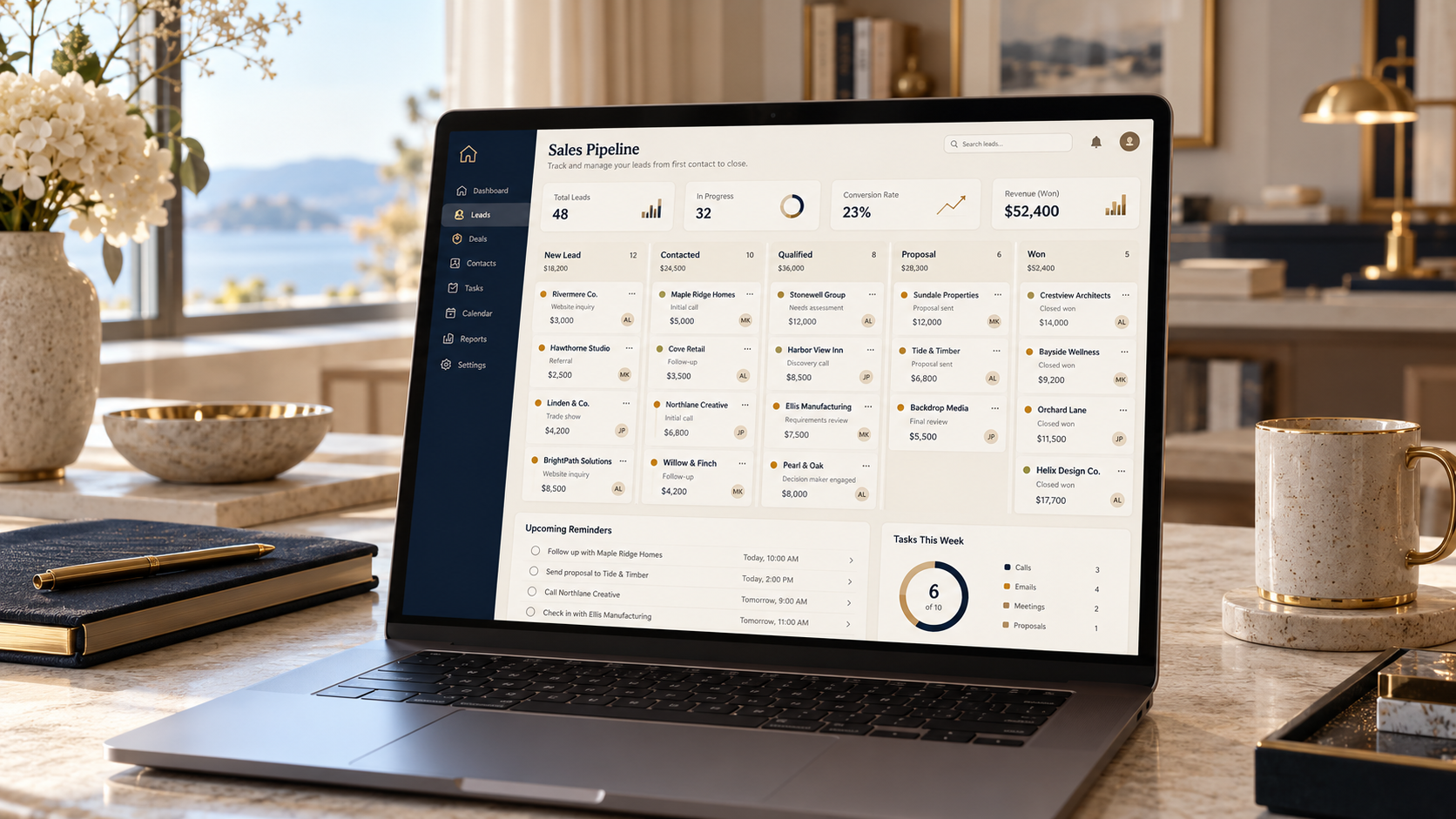
Illustrative CRM follow-up dashboard — AI-generated interface and sample data.
A new inquiry is an opportunity to start a conversation, but it does not automatically become a customer. When inquiries are scattered across email, social media messages, website forms and phone calls, it can be difficult to remember who needs a reply or what should happen next.
A simple customer relationship management (CRM) system can help a small business keep those conversations organized. The goal isn’t to add more software or automate every interaction. It’s to make sure each inquiry has a clear status, an owner and a sensible next step.
Why lead follow-up deserves attention
In its 2026 B2B marketing guidance, LinkedIn recommends looking beyond the number or cost of leads and measuring whether marketing contributes to pipeline and revenue. That’s a useful distinction for small businesses, too: a growing inquiry count is informative, but it doesn’t show whether those inquiries are relevant or progressing toward a decision. LinkedIn’s 2026 guidance
The work of managing inquiries can also take time away from serving customers. Salesforce’s 2026 State of Sales report found that surveyed sales professionals spend more than half their time on non-selling work, including data entry and prospecting. The study surveyed sales professionals across multiple countries and organization sizes, so it should be read as a broad industry signal rather than a small-business-specific finding. Salesforce’s report and survey details
Build your CRM around your actual process
Start with a small number of stages that reflect how people become customers in your business.
For example:
New inquiry
Contacted
Qualified
Appointment, estimate or proposal
Decision pending
Won or not moving forward
The labels will vary by business. The important part is that everyone using the CRM understands what each stage means and when an inquiry should move to the next one.
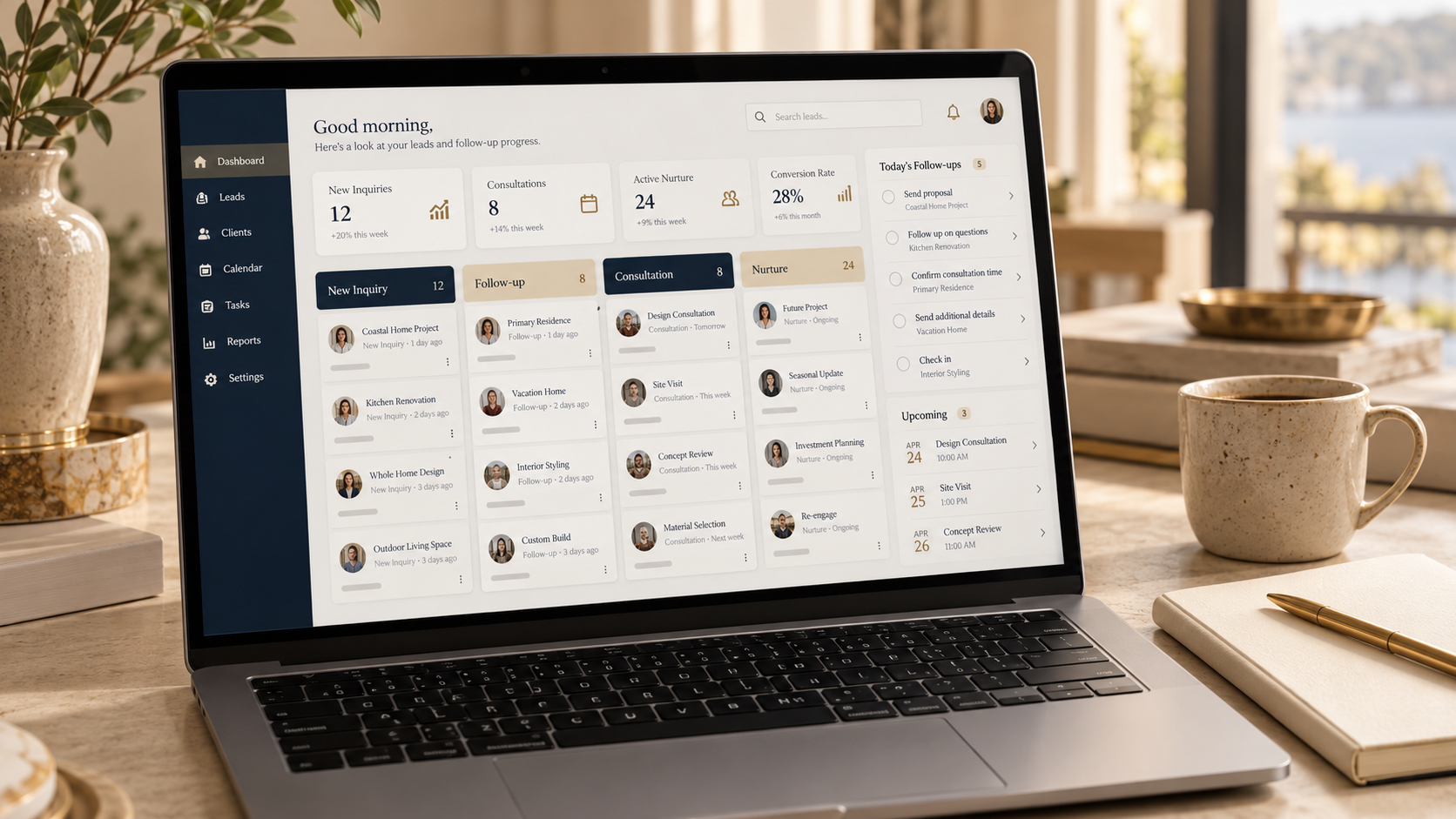
Illustrative CRM pipeline — AI-generated interface and sample data.
Record the details that help you respond
A useful lead record doesn’t need every possible data point. Start with the information needed to continue the conversation: the person’s contact details, how they found you, what they’re looking for, when they got in touch, and any agreed next step. Respect people’s communication preferences and applicable consent requirements when storing and using their information.
Give every active inquiry a next step
An inquiry marked “contacted” can still be forgotten if no one knows what to do next. For each active opportunity, record an action and a due date: reply with requested information, schedule a call, prepare a proposal or check back after an agreed period.
Set response expectations your team can consistently meet. A dependable process is more useful than a target that looks impressive but isn’t realistic for your capacity.
Keep follow-up relevant and personal
Follow-up should help the person make an informed decision. A message might answer an outstanding question, share relevant service details or confirm the next appointment. If someone has declined or asked not to be contacted, update the record and respect that preference.
Automation can help with routine reminders, task creation or inquiry acknowledgments. Keep a person involved in conversations that call for judgment, context or a personal response.
Measure progress, not just lead volume
Review a few practical measures regularly:
Where inquiries come from
How many receive a response
How many progress to an appointment, estimate or proposal
Which stages tend to stall
How many become customers, and why some do not
These details can help you decide where to improve your marketing or follow-up process. They won’t guarantee a particular result, but they give you a clearer picture than inquiry counts alone.
Keep the system simple enough to maintain
A CRM only helps when the information stays useful. Assign responsibility for updating records, remove duplicate entries and review open opportunities on a regular schedule. Choose tools that fit your current workflow, then add features only when there is a clear need for them.
The takeaway: lead generation brings inquiries into your business; a clear CRM and follow-up process help you manage what happens next. Start with one place to record inquiries, a few meaningful stages, a named owner and a specific next step. Build from there as your needs grow.
At IDUN ISLE, we help businesses connect lead generation with practical CRM management and follow-up workflows. If inquiries are getting lost between marketing and sales, get in touch to discuss a system that fits your business.